VO₂ Max Development in Swimmers
Evidence-based overview of how VO₂ max develops in swimmers and the training variables that influence it.
VO₂ max represents the maximal rate of oxygen uptake during intense exercise and reflects the integrated capacity of the cardiovascular, respiratory, and muscular systems to transport and utilize oxygen.
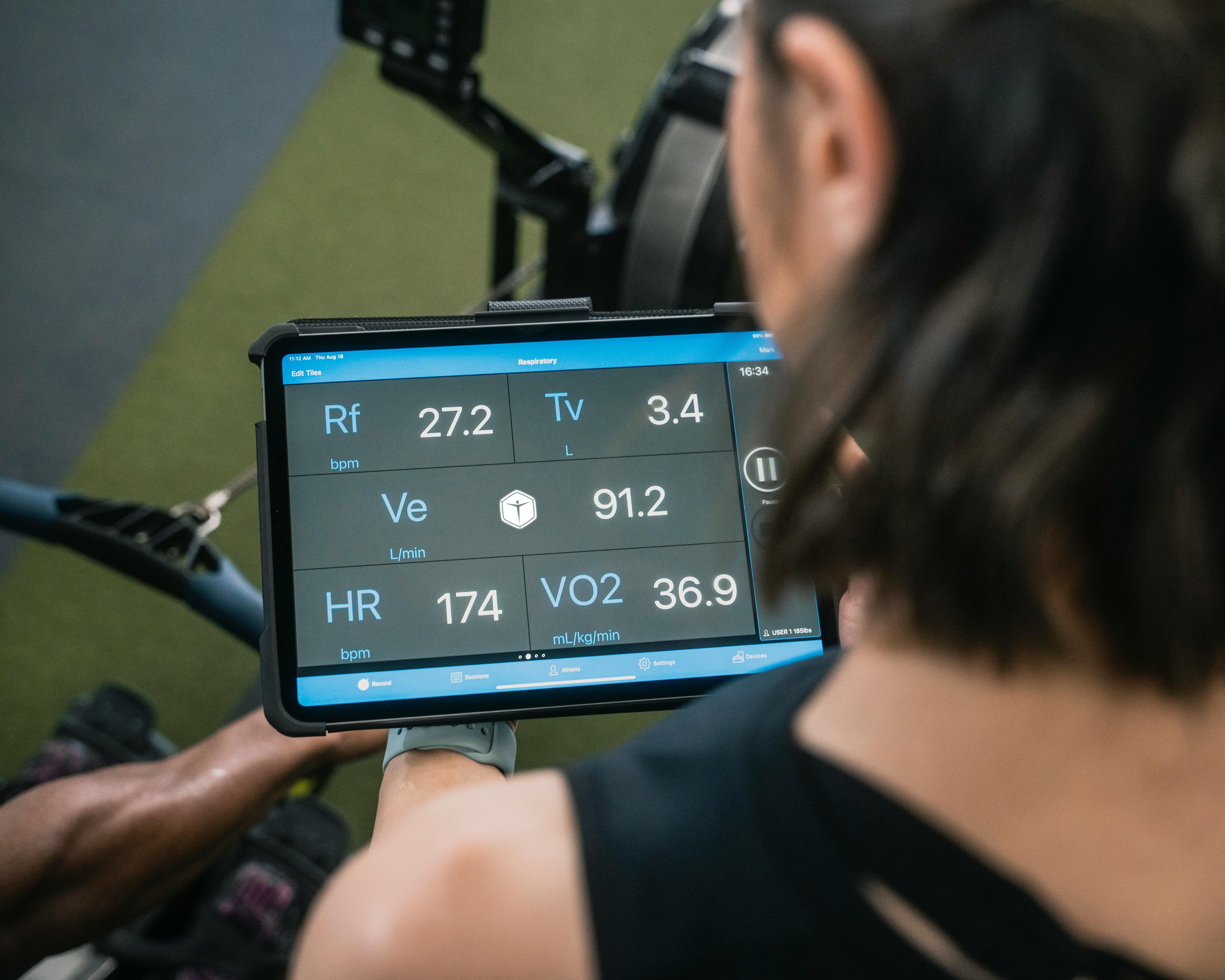
In swimming, VO₂ max is a key determinant of aerobic performance capacity, influencing endurance, pacing, and the ability to sustain high-intensity efforts across competitive distances.
VO₂ max in swimmers develops primarily through endurance training, with anaerobic threshold training exerting the strongest influence.
Elite swimmers typically achieve 66–80 ml O₂/kg/min, reflecting both training adaptations and potential genetic contributions.
Key Evidence

Endurance and Threshold Training Drive VO₂ Max Development
Identified three endurance training zones that improve VO₂ max, with anaerobic threshold training producing the most substantial gains. This highlights the importance of sustained, high-aerobic workloads in swimming conditioning.




Genetic and Maturational Factors Influence VO₂ Max
Studying 48 pubescent girls, noted that elite swimmers' superior VO₂ max may partially reflect genetic predisposition and early maturation, not training alone. This underscores the multifactorial nature of aerobic capacity.
Conclusion
VO₂ max in swimmers is shaped by endurance and threshold training, with additional contributions from strength training and sport–specific interval work.
Elite swimmers achieve high VO₂ max values, though these reflect a combination of training adaptations, genetic factors, and maturational influences.
Citation
-
Baxter-Jones, A., Goldstein, H., & Helms, P. (1993). The development of aerobic power in young athletes. Journal of Applied Physiology.
-
Bencke, J., & Klausen, K. (2002). Differences in maximal oxygen uptake between pubescent girl swimmers and gymnasts. Medicine and Science in Sports and Exercise.
-
Bojan, J., Miloš, P., Okičić, T., & Meškovska, N. (2011). Importance of maximal oxygen consumption during swimming. Facta Universitatis: Series Physical Education and Sport.
-
de Haan, M., van der Zwaard, S., Schreven, S., Beek, P. J., & Jaspers, R. (2024). Determining V̇O₂max in competitive swimmers: Comparing validity and reliability of cycling, arm cranking, ergometer swimming, and tethered swimming. Journal of Science and Medicine in Sport.
-
Fernandes, R., Keskinen, K., Colaço, P., Querido, A., Machado, L., Morais, P., Novais, D., Marinho, D., & Boas, J. (2007). Time Limit at V̇O₂max Velocity in Elite Crawl Swimmers. International Journal of Sports Medicine.
-
Goss, C. S., Greenshields, J., Husch, S. D., Chapman, R., & Stager, J. (2019). Limitations to V̇O₂max in competitive swimmers: 2399 Board #63 May 31 9:30 AM – 11:00 AM. Journal not defined in database.
-
Kimura, Y., Yeater, R. A., Martin, R. B., Rõõm, & Coliseum. (1990). Simulated swimming: a useful tool for evaluating VO₂ max of swimmers in the laboratory. British Journal of Sports Medicine.
-
Li, T., Jiang, L., & Li, L. (2022). Changes in VO₂max caused by aerobic exercise in swimmers. Revista Brasileira de Medicina do Esporte.
-
Magel, J., Foglia, G. F., McArdle, W. D., Gutin, B., Pechar, G., & Katch, F. (1975). Specificity of swim training on maximum oxygen uptake. Journal of Applied Physiology.
-
Roels, B., Schmitt, L., Libicz, S., Bentley, D. J., Richalet, J., & Millet, G. P. (2005). Specificity of V̇O₂max and ventilatory threshold in free swimming vs. cycle ergometry: Comparison between triathletes and swimmers. British Journal of Sports Medicine.
Was this helpful?