Non‑Propulsive Phases in Swimming Stroke Cycles
Evidence‑based overview of how non‑propulsive phases vary across strokes, skill levels, fatigue states, and training adaptations.
Definition of Non‑Propulsive Phases
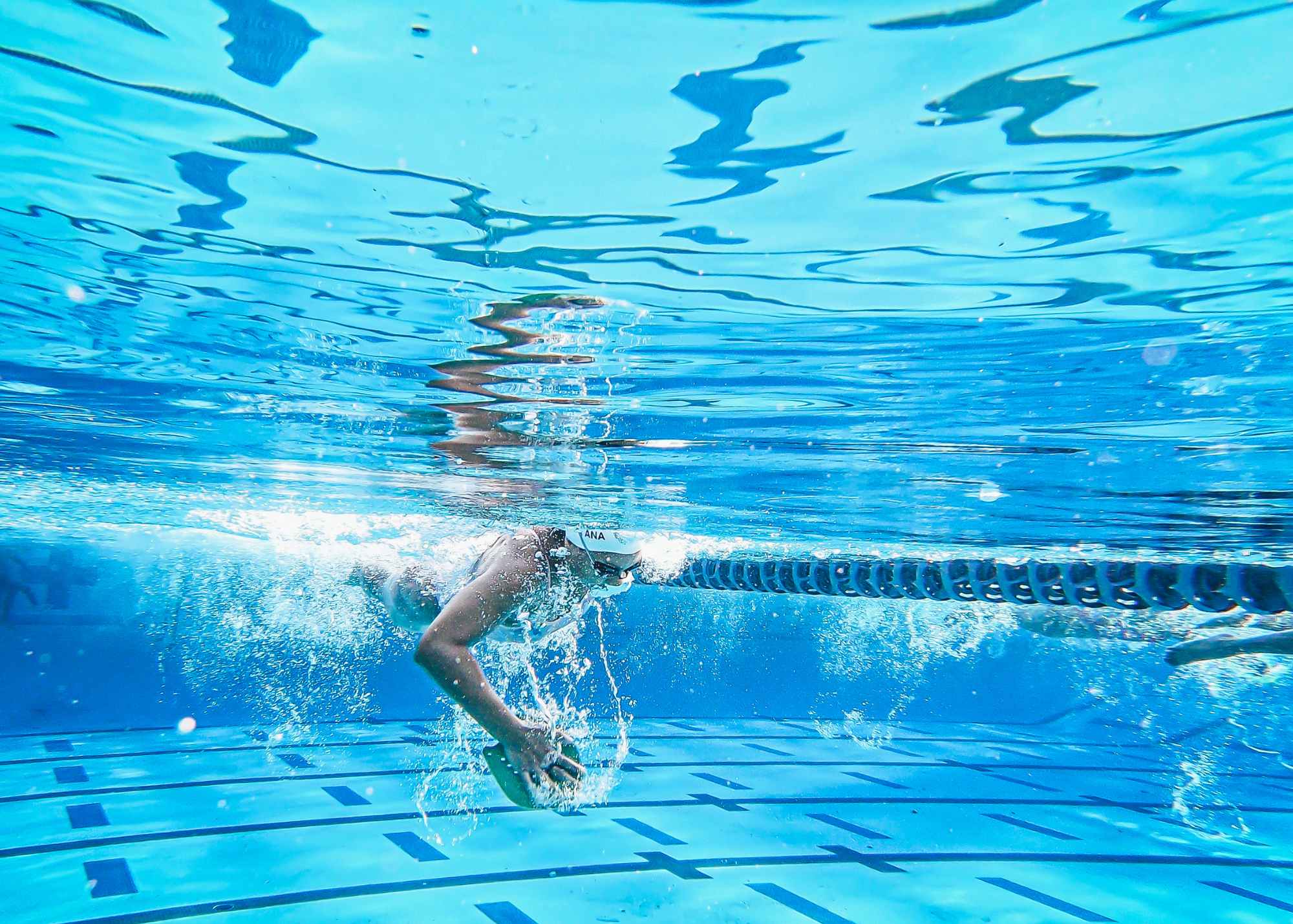
Non‑propulsive phases comprise a substantial portion of the swimming cycle across all strokes, though their duration varies significantly by stroke type and skill level.
These phases include entry, downsweep, glide, and recovery components that do not directly generate forward propulsion but strongly influence velocity fluctuation and stroke efficiency.
Performance Relevance
Non‑propulsive phases influence:
- Velocity fluctuation
- Stroke timing
- Drag management
- Propulsive continuity
- Fatigue resistance
Elite swimmers minimize unnecessary deceleration during these phases, demonstrating superior technique, coordination, and body positioning.
Core Principle
Non‑propulsive phases represent a large portion of the stroke cycle and are highly sensitive to stroke type, skill level, fatigue, and training status.
Elite swimmers reduce unnecessary glide, maintain better continuity between propulsive actions, and manage deceleration more effectively than non‑elite swimmers.
Key Evidence
Component 1: Non‑Propulsive Phases Dominate the Front Crawl Cycle

Non‑Propulsive Phases Dominate the Front Crawl Cycle
In front crawl at sprint pace, non‑propulsive phases (entry, downsweep, and recovery) account for approximately 56% of the cycle, with recovery alone comprising 26% (A. Fernandes et al., 2021).
However, even the entry and catch phase—traditionally classified as non‑propulsive—generates meaningful force (29.1% of propulsive phase force) (Daiki Koga et al., 2020).
Component 2: Elite Breaststrokers Minimize Glide and Improve Continuity

Elite Breaststrokers Minimize Glide and Improve Continuity
In breaststroke, elite swimmers strategically minimize non‑propulsive glide phases to 11.89–18.80% of the cycle, compared to 19.60–31.04% in non‑elite swimmers (H. Leblanc et al., 2005).
Elite swimmers demonstrate superior timing continuity between arm and leg actions, and reducing glide duration while maintaining stroke length correlates with faster speeds (H. Leblanc et al., 2005 & 1 others).
Component 3: Training Adaptations Alter Phase Timing

Training Adaptations Alter Phase Timing
Training adaptations significantly alter phase timing. After three months of aerobic training, swimmers developed longer non‑propulsive phases while increasing swimming speed, suggesting they generated greater force impulse during propulsive phases to compensate (C. Schnitzler et al., 2014).
This indicates that optimal phase timing is trainable and may reflect improved drag/propulsion adaptation.
Component 4: Fatigue Systematically Alters Phase Duration

Fatigue Systematically Alters Phase Duration
Fatigue systematically alters phase duration. During exhaustive swimming, propulsive phases increase while non‑propulsive phases decrease, accompanied by reduced stroke length and increased stroke rate (N. Bassan et al., 2016).
These changes correlate with decreased muscle strength, suggesting that maintaining optimal phase timing requires adequate muscular capacity.
Component 5: Speed‑Dependent Coordination Differs by Skill Level

Speed‑Dependent Coordination Differs by Skill Level
Speed‑dependent coordination patterns vary by skill level. When increasing pace, competitive swimmers switch from glide to overlapped coordination while maintaining propulsive phase efficiency, whereas recreational swimmers use overlapped technique regardless of speed and show no change in relative propulsive time (H. Leblanc et al., 2009).
Component 6: Specific Phases Correlate With Performance

Component 7: Velocity Fluctuation Management Distinguishes Elite Swimmers

Velocity Fluctuation Management Distinguishes Elite Swimmers
Velocity fluctuation management is crucial. Elite swimmers demonstrate superior ability to minimize deceleration during non‑propulsive phases through optimal body positioning and technique, which distinguishes performance levels (H. Takagi et al., 2004).
Conclusion
Non‑propulsive phases represent a large portion of the stroke cycle and are highly sensitive to stroke type, skill level, fatigue, and training status.
Elite swimmers minimize unnecessary glide, maintain better continuity between propulsive actions, and manage deceleration more effectively.
Training and fatigue both reshape phase timing, making non‑propulsive phases a key target for performance optimization.
Citation
- A. Fernandes et al., 2021
- Daiki Koga et al., 2020
- H. Leblanc et al., 2005
- C. Schnitzler et al., 2014
- N. Bassan et al., 2016
- H. Leblanc et al., 2009
- Marek Strzała et al., 2013
- H. Takagi et al., 2004
Was this helpful?