Dryland Strength Training in Swimmers
Evidence-based analysis of dryland strength training effects and the limited support for periodization superiority.
Definition of Dryland Strength Training
Dryland strength training refers to resistance and power–based exercises performed outside the aquatic environment to enhance neuromuscular function, force production, and overall swimming performance.
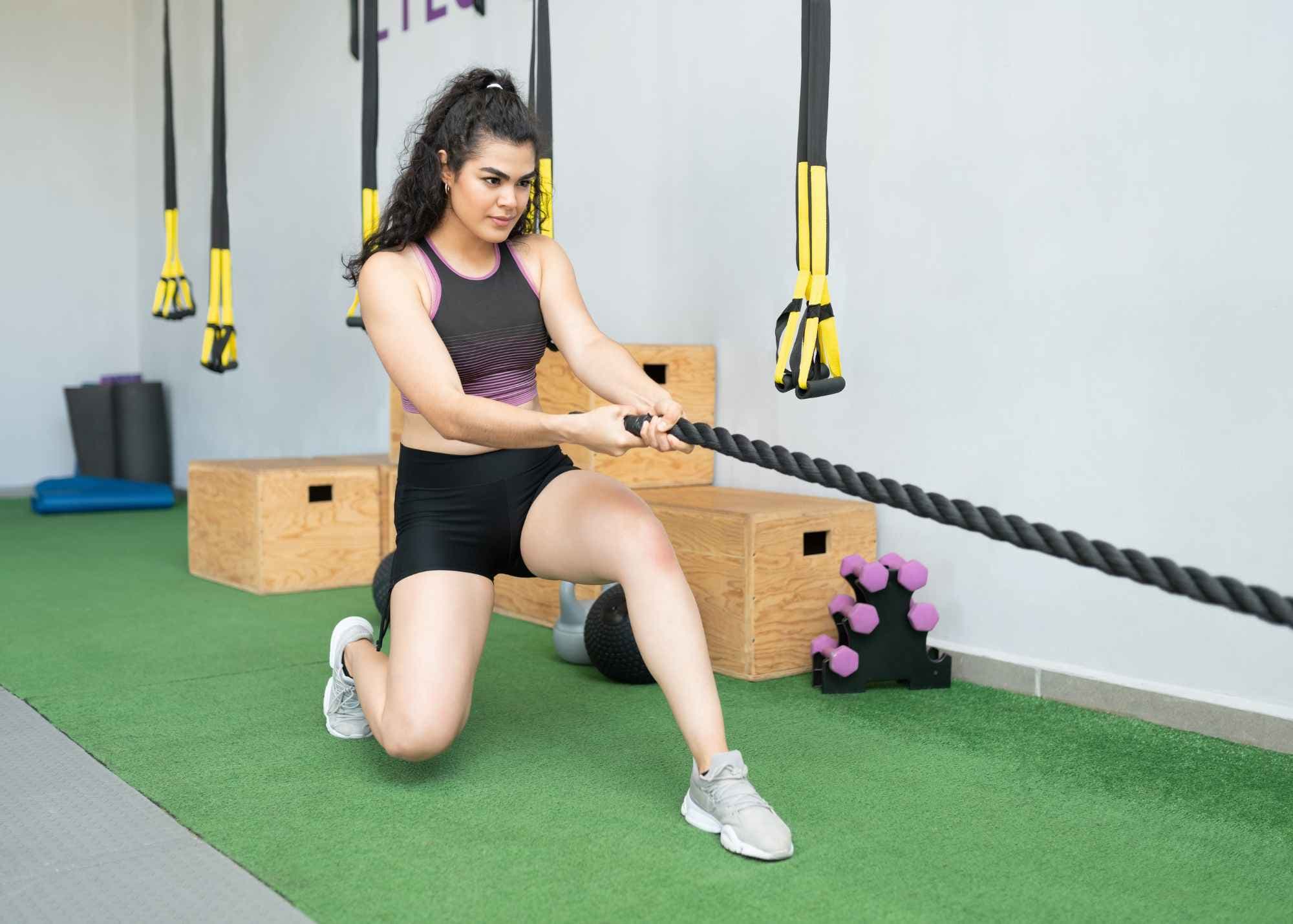
Performance Relevance
Dryland training is widely used to improve sprint speed, start and turn power, and stroke efficiency.
However, the optimal periodization model for maximizing transfer to swimming performance remains uncertain.
Core Principle
Dryland strength training improves swimming performance, particularly in sprint events, but the evidence for periodization superiority is inconsistent.
Both periodized and non–periodized programs appear to yield similar performance outcomes in swimmers.
Key Evidence
Component 1: Dryland Strength Training Improves Sprint Performance

Dryland Strength Training Improves Sprint Performance
Lopes et al. (2020) demonstrated that 8 weeks of dryland strength training in 20 national–level swimmers significantly improved:
- 50 m performance (d = 0.47)
- 100 m performance (d = 0.42)
This confirms that strength development outside the pool can meaningfully enhance sprint outcomes.
Component 2: Explosive Training Produces Superior Short–Distance Gains

Explosive Training Produces Superior Short–Distance Gains
Amaro et al. (2017) found that 6 weeks of explosive–focused dryland training in 21 age–group swimmers produced greater 50 m improvements than traditional strength training.
This suggests that power–oriented adaptations may transfer more effectively to short–duration events.
Component 3: Periodization Does Not Clearly Outperform Non–Periodized Training

Periodization Does Not Clearly Outperform Non–Periodized Training
Schumann et al. (2020) compared periodized vs. non–periodized dryland strength training in 16 well–trained adolescent swimmers over 16 weeks and found:
- No significant differences between periodization models
- Both groups improved performance similarly
This indicates that periodization structure may not be the primary driver of performance gains.
Component 4: Systematic Review Shows Benefits but Inconsistent Periodization Effects

Systematic Review Shows Benefits but Inconsistent Periodization Effects
A systematic review by Amaro et al. (2019) recommended:
- Maximal strength periodization
- 6–12 weeks, 2–4 sessions per week, 80–90% 1RM
However, the review also noted:
- 7 of 16 studies showed no performance improvements
This highlights variability in outcomes and limited consensus on optimal periodization strategies.
Component 5: Integrated Interpretation of Evidence

Integrated Interpretation of Evidence
Dryland strength training reliably enhances swimming performance, particularly in sprint events.
However, periodization superiority is not supported by consistent evidence, and improvements appear to arise from the training stimulus itself rather than the specific organizational model.
Conclusion
Dryland strength training reliably enhances swimming performance, particularly in sprint events.
However, periodization superiority is not supported by consistent evidence, and improvements appear to arise from the training stimulus itself rather than the specific organizational model.
Citation
- Lopes, T. J., et al. (2020)
- Amaro, N., et al. (2017)
- Schumann, M., et al. (2020)
- Amaro, N., et al. (2019)
Was this helpful?